
Jaw Dislocation & TMJ Problems
Patient Guide – Jaw Dislocation and TMJ Problems
Jaw dislocation and temporomandibular joint (TMJ) disorders can cause severe discomfort, difficulty in speaking or eating, and even long-term jaw problems if left untreated. At Dharahara Dental, we provide expert diagnosis and treatment to restore normal jaw function and relieve pain.
Understanding Jaw Dislocation
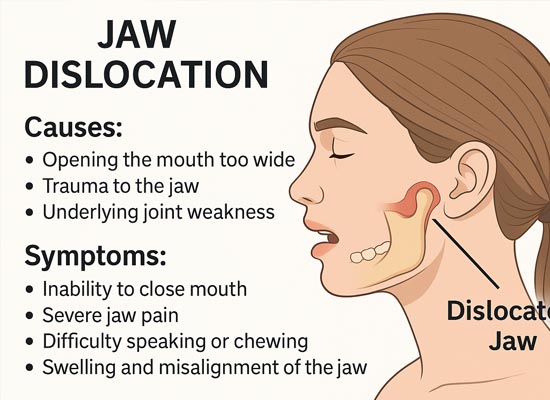
A jaw dislocation occurs when the lower jaw (mandible) moves out of its normal position in the joint. This can be caused by:
- Opening the mouth too wide (yawning, laughing, dental procedures)
- Trauma to the jaw
- Underlying joint weakness
Symptoms of jaw dislocation include:
- Inability to close the mouth completely
- Severe jaw pain
- Difficulty speaking or chewing
- Swelling and misalignment of the jaw
Understanding TMJ Problems
The temporomandibular joint (TMJ) connects your jaw to your skull. TMJ disorders can result from stress, injury, teeth grinding, arthritis, or misaligned teeth.
Common TMJ disorder symptoms:
- Jaw pain or tenderness
- Clicking or popping sounds when opening the mouth
- Locking of the jaw
- Headaches and earaches
When to Seek Immediate Dental Care
Visit a dentist or emergency room immediately if you experience:
- Jaw stuck in an open position
- Severe pain and swelling
- Difficulty breathing or swallowing
- Jaw injury due to an accident or fall
Treatment Options at Dharahara Dental
- Manual Reduction: Gently repositioning the jaw back into place (performed by a dentist or oral surgeon).
- Splint or Bite Guard: Used for TMJ disorders to prevent teeth grinding and reduce strain.
- Medications: Pain relievers, anti-inflammatories, or muscle relaxants to manage symptoms.
- Physical Therapy: Jaw exercises to strengthen muscles and improve movement.
- Corrective Dental Treatment: Adjusting bite problems that contribute to TMJ stress.
Home Care and Prevention Tips
- Avoid opening your mouth too wide.
- Eat soft foods to reduce jaw strain.
- Apply warm compresses to relax muscles.
- Manage stress to prevent teeth grinding.
- Regular dental checkups to monitor jaw health.
Book Your Appointment
If you have jaw pain, clicking sounds, or difficulty moving your jaw, book a consultation with Dharahara Dental. Early treatment can prevent long-term damage and restore comfort.
FAQs on Jaw Dislocation and TMJ Problems
- 1. Can a dislocated jaw heal on its own?
- No. A dislocated jaw usually requires professional repositioning to avoid further damage.
- 2. Is TMJ disorder permanent?
- Not always. Many TMJ problems can be managed with treatment, lifestyle changes, and dental adjustments.
- 3. Can stress cause TMJ pain?
- Yes. Stress can lead to jaw clenching and teeth grinding, which may worsen TMJ symptoms.
- 4. When should I see a dentist for jaw problems?
- Seek care if you have persistent jaw pain, clicking sounds, difficulty opening your mouth, or after a jaw injury.